How I Built a Personal Brand From Zero to 1.2M Likes (What Actually Works)

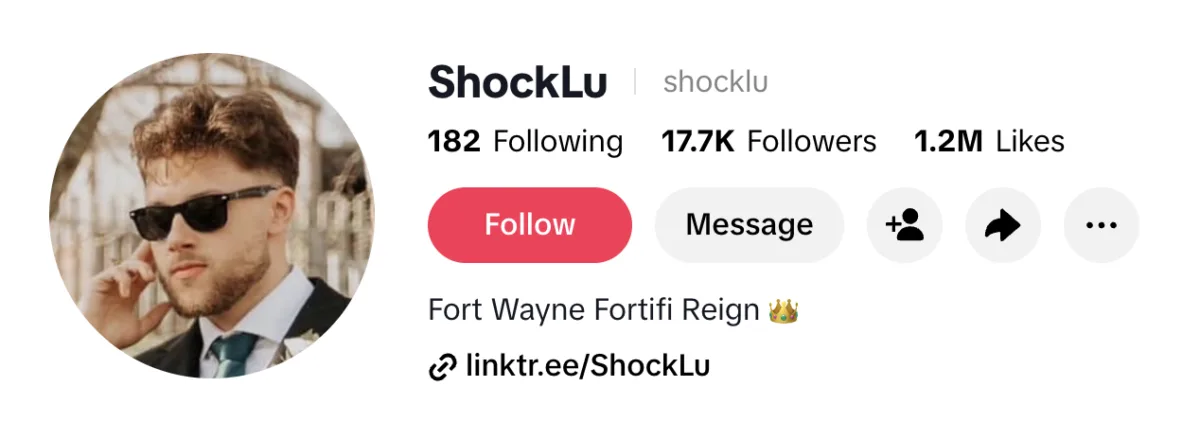
I started creating content in 2019 under the name ShockLu. No strategy, no plan, no audience. Just a camera, a gaming setup, and the stubborn belief that if I kept showing up, something would click. Six years and 1.2 million TikTok likes later, I can tell you exactly what worked — and what I’d do differently if I were starting from scratch today.

Start With One Platform, Not Five

The biggest mistake new creators make is trying to be everywhere at once. TikTok, YouTube, Instagram, X, LinkedIn — it’s overwhelming, and you end up being mediocre on all of them instead of great on one. Pick the platform where your audience already lives and go all in. For me, that was TikTok. The short-form format matched my energy and the gaming community was active there. Once I built momentum on one platform, repurposing to others became natural.

Consistency Beats Perfection Every Time

My first videos were rough. Bad lighting, average editing, no real hook. But I posted them anyway. Over 6,400 posts across platforms — not because each one was perfect, but because every post taught me something. The algorithm rewards consistency more than quality in the early days. Once you have the consistency locked in, then you start optimizing. Not the other way around.

This is the same principle I bring to marketing at HVACGrowth.co and my consulting work. The businesses that win online aren’t the ones with the fanciest content — they’re the ones that show up every single day.

Your Brand Is What People Say When You’re Not in the Room

A personal brand isn’t a logo or a color palette. It’s the feeling people get when they interact with your content. For ShockLu, that feeling is energy, competitive drive, and realness. For SculptLu, it’s discipline and transformation. Every piece of content I create reinforces one of those feelings. If your content doesn’t make people feel something specific, it’s forgettable.

Document, Don’t Create

This is advice I picked up from working under Dennis Yu at Local Service Spotlight, and it changed everything. Instead of sitting down to “create content,” just document what you’re already doing. Working on a project? Film it. Learning something new? Share it. Had a tough day? Talk about it. Documentation is authentic, sustainable, and infinitely easier than trying to manufacture ideas from nothing.

My Road to Pro series on YouTube is pure documentation — the journey from casual to competitive Call of Duty, recorded in real time. No scripts, no acting. Just the real process. That authenticity is what builds a community, not polished production.

The Compound Effect of Showing Up

Building a personal brand is a long game. The first hundred posts might feel like shouting into the void. But each one is a data point. You learn what resonates, what falls flat, and who your real audience is. By post 500, you have a body of work that speaks for itself. By post 1,000, opportunities start finding you instead of the other way around.

That’s exactly what happened with my career. Content creation led to marketing expertise. Marketing expertise led to building HVACGrowth.co. The personal brand wasn’t just content — it became the foundation for everything else.

Start Today

If you’re thinking about building a personal brand, stop thinking and start posting. Pick one platform, commit to posting three times a week for 90 days, and document your journey along the way. The best time to start was five years ago. The second best time is right now.

Want to talk about building your brand or need help with content strategy? Book a free consultation — I’m always down to help people who are ready to put in the work.

Ready to take your personal brand to the next level? Explore my 1-on-1 personal brand coaching where I help creators and entrepreneurs build brands that actually grow. See how I apply these same principles across my ventures, or check out my content portfolio to see these strategies in action.

Why Most HVAC Companies Fail at Google Maps SEO (And How to Fix It)

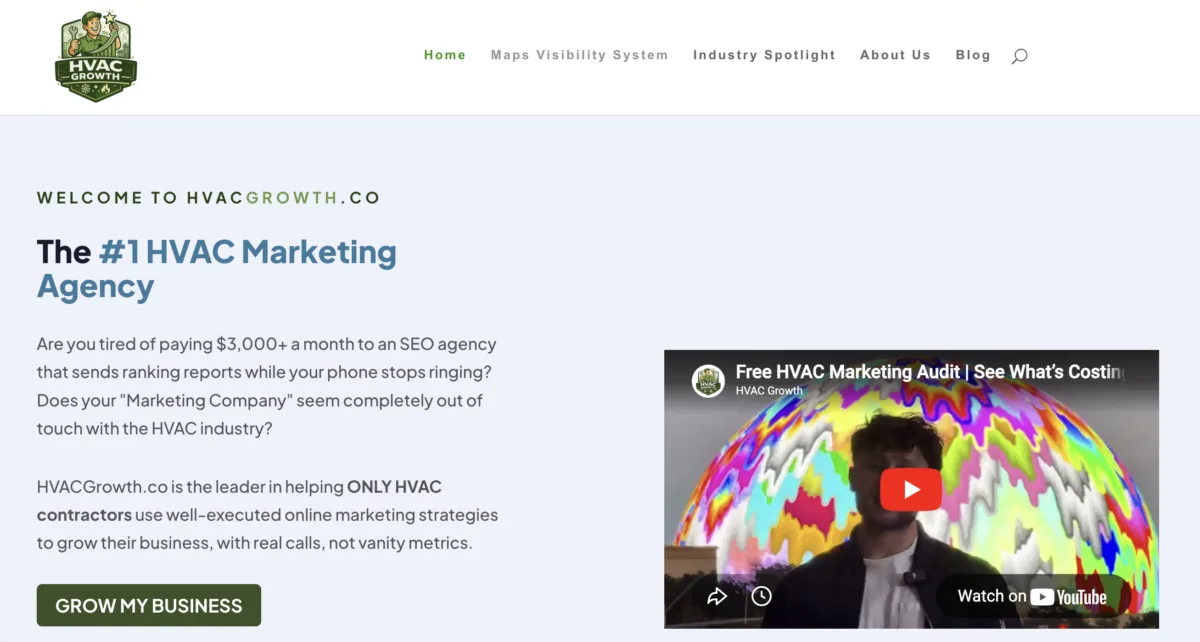
If you run an HVAC company, you already know the phone needs to ring. But here’s what most contractors don’t realize: the reason it’s not ringing isn’t your reputation — it’s your Google Maps visibility. After working exclusively with HVAC businesses at HVACGrowth.co, I’ve seen the same patterns repeat across dozens of companies. The good news? Every one of them is fixable.

The #1 Problem: Your Google Business Profile Is Half-Built

Most HVAC companies claim their Google Business Profile and stop there. They add a phone number, maybe an address, and call it done. That’s like building a house with no roof — technically it exists, but it’s not doing its job.

A fully optimized GBP includes complete service categories, a keyword-rich business description, consistent NAP (Name, Address, Phone) data, regular Google Posts, and — critically — a steady flow of customer photos and reviews. Google rewards profiles that show activity and completeness. If your competitors are doing this and you’re not, you’re invisible in the map pack.

Geo-Grid Rankings: The Metric That Actually Matters

Here’s something most agencies won’t tell you: ranking #1 in Google Maps from your office doesn’t mean you rank #1 across your entire service area. Google Maps results change based on the searcher’s location. That’s where geo-grid ranking reports come in.

A geo-grid overlays your service area with a grid of points and checks your ranking at each one. The result is a heat map showing exactly where you’re visible and where you’re not. This is the metric I use with every HVAC client because it tells the real story — not the vanity version your current agency might be showing you.

HVACGrowth.co ranking #1 on Google search results for HVAC marketing
HVACGrowth.co ranking #1 on Google — proof that these strategies work.

This isn’t theory. At HVACGrowth.co, we practice exactly what we preach — and it shows. When you search for HVAC marketing on Google, we’re the #1 result. The same strategies we use to dominate search for ourselves are the ones we implement for every HVAC contractor we work with.

Why Reviews Are Your Secret Weapon

Google’s local algorithm weighs three things heavily: relevance, distance, and prominence. You can’t control distance, but you can absolutely control prominence — and reviews are the biggest prominence signal. I’m not talking about buying fake reviews. I’m talking about building a systematic process where every satisfied customer gets a simple, frictionless way to leave a review.

The HVAC companies I work with that implement a consistent review strategy see measurable ranking improvements within weeks, not months. Combine that with proper GBP optimization and you’re building a foundation that compounds over time.

The 7-Day Test

At HVACGrowth.co, we prove results before you pay. In 7 days, we run a full geo-grid analysis, optimize your Google Business Profile, and show you exactly where your rankings improved. If the needle doesn’t move, we walk away. That’s how confident we are in the system.

If your current marketing agency can’t show you a geo-grid report, they’re guessing. And if they’re guessing with your money, it’s time for a change.

What You Can Do Right Now

Start with these three things today. First, log into your Google Business Profile and make sure every section is filled out completely — services, hours, description, and photos. Second, ask your last five happy customers to leave a Google review. Send them the direct link. Third, post on your GBP at least once a week. Share a completed job photo, a seasonal tip, or a promotion. Google tracks this activity and rewards it.

The HVAC companies winning on Google Maps aren’t doing anything magical. They’re doing the fundamentals consistently. If you want to see where you stand, book a free consultation and I’ll run a geo-grid analysis for your business — no strings attached.

Want to see how we’ve helped real HVAC contractors grow? Check out our ventures and case studies, or book a 1-on-1 coaching session to get personalized strategies for your business. You can also read more about building a brand from zero on our blog.